

Home > Applications > Ex Vivo Human Skin Model of Human Acne Pathology
Ex Vivo Human Skin Model of Human Acne Pathology
A translational platform to study acne-associated inflammation and tissue remodeling
Imavita has developed and validated an ex vivo human skin model reproducing key biological hallmarks of acne pathology, based on controlled stimulation with Cutibacterium acnes.
This model provides a robust, ethical, and highly translational alternative to in vivo approaches for the evaluation of therapeutic candidates targeting acne.

Why an Ex Vivo Acne Model?
Acne, also known as Acne vulgaris, is a skin disorder that affects 1 in 5 people worldwide, with a prevalence of 28.3% among individuals aged 16 to 24.
Different forms of acne are observed in the population (comedones, pustules, papules, etc.).
In recent years, resistance phenomena to treatments particularly antibiotics have continued to increase.
One of the main causes is related to the dysbiosis of the microorganism Cutibacterium acnes (C. acnes), a common commensal bacterium of the skin.
C. acnes resides within the pilosebaceous follicle, an area with low oxygen levels, thereby disrupting key biological pathways.
The resulting biological phenomena manifest as excessive sebum production, chronic inflammation, and the recruitment of both the innate and adaptive immune systems.
Acne is a multifactorial inflammatory disease involving:
- Activation of innate immunity
- Dysregulation of inflammatory cytokines
- Extracellular matrix remodeling
- Altered epidermal homeostasis
Our ex vivo model preserves the full architecture of human skin (epidermis, dermis, immune components), allowing direct assessment of human-relevant mechanisms under controlled experimental conditions.
Model Overview
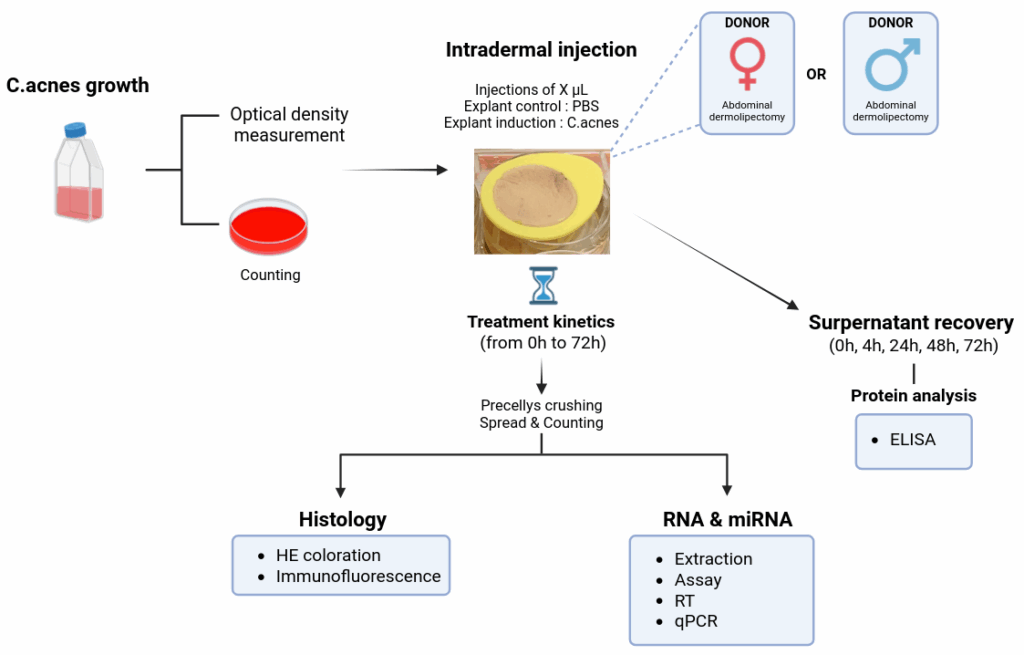
Biological system: Human skin explants
Stimulation: Cutibacterium acnes exposure (24h and 72h)
Readouts
Gene expression (qPCR, mRNA & miRNA)
Inflammatory and immune pathways
Extracellular matrix remodeling markers
Immunofluorescence-based structural analysis
This multi-level approach ensures mechanistic depth and biological consistency.
Key Biological Features
🔬 Inflammatory Cascade Activation
The model reproduces a strong acne-like inflammatory response, including:
- Upregulation of pro-inflammatory cytokines
- TNFα
- IL-6
- IL-8
- IL-1α (delayed response at 72h)
- Activation of NF-κB signaling, a central regulator of inflammatory gene expression
- NLRP3 inflammasome activation, consistent with innate immune responses observed in acne lesions
These responses demonstrate a functional and dynamic inflammatory network, suitable for anti-inflammatory efficacy testing.
🧬 Extracellular Matrix Remodeling
- MMP3 expression is markedly increased following C. acnes stimulation
- TIMP2 expression is not upregulated, indicating limited inhibition of matrix degradation
This imbalance mirrors tissue remodeling and dermal stress observed in inflammatory acne.
🧪 Epidermal Integrity and Proliferation
Immunofluorescence analyses show:
- Preserved epidermal structure
- Stable keratin 10 expression (no hyperkeratinization)
- Maintained filaggrin levels (barrier integrity)
- No excessive keratinocyte hyperproliferation
- Ki67-positive cells remain controlled
This confirms that the model induces inflammation without compromising tissue viability, a critical requirement for compound screening.
🧠 Regulatory Pathways
- TLR2 expression remains stable, suggesting downstream activation rather than receptor overexpression
- miR-146-5p remains unchanged, indicating absence of compensatory anti-inflammatory over-regulation
- IL-10 is not significantly induced, supporting sustained inflammatory signaling
These findings reinforce the pathological relevance and controlled balance of the model.
Applications
This ex vivo acne model is ideally suited for:
Screening anti-inflammatory or anti-acne compounds
Mechanistic studies on innate immunity and inflammasome activation
Evaluation of drugs targeting redness, inflammation, or tissue damage
Comparative efficacy studies (reference vs. candidate compounds)
Supporting regulatory and scientific claims with human-relevant data
Imavita supports its clients from study design to data interpretation, adapting the ex vivo acne model to your scientific objectives and product positioning.
Key Advantages of Model
Preserves the native architecture and signaling pathways of human skin, ensuring high translational relevance.
Uses human skin explants, reducing animal use while improving clinical predictivity.
Contact our team to discuss your preclinical development needs.
FAQ
What aspects of acne does this model reproduce?
The model reproduces key acne hallmarks, including inflammation, cytokine release, NF-κB and NLRP3 activation, and extracellular matrix remodeling induced by Cutibacterium acnes.
Which types of readouts can be measured?
Gene expression (mRNA, miRNA), inflammatory markers, immune pathways, and epidermal structure can be assessed using qPCR and immunofluorescence.
How predictive is this model for human outcomes?
Because it is based on human skin explants, the model offers higher translational value than animal models for inflammation-driven acne mechanisms.
Can the model be customized to specific research needs?
Yes, stimulation conditions, time points, and biological markers can be tailored to match specific product claims or mechanistic questions.
Is this model suitable for cosmetic as well as pharmaceutical research?
Yes, the model is well adapted for dermo-cosmetic ingredients, drug candidates, and comparative efficacy studies.
